

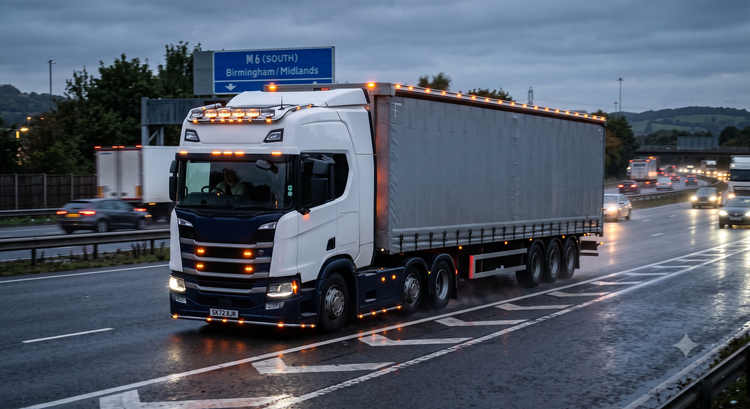
Lorry LED Marker Lights: The UK Driver's Complete Guide
July 15, 2026
Pull into any UK truck stop after dark and you will spot them straight away. The orange glow running along the roof of a Scania, the white markers picking out the cab corners on a DAF, the bright amber dots that make a Volvo look properly kitted out from half a mile off. Marker lights are one of those bits of kit that started life as a practical visibility feature and turned into the calling card of a well looked after lorry. We get asked about them at CDC every week, and most of the questions come down to the same handful of things, so we thought it was time to put together a proper guide.
What a marker light actually does
A marker light, sometimes called an outline light or position lamp, sits on the edges of the cab and trailer to show other road users your shape and size, especially in poor light or bad weather. On a long lorry that can be the difference between a car driver spotting you in time or pulling out into the side of the trailer. They are not optional kit on most HGV setups, they are a legal requirement, and that is before you get into the styling side of things.
Beyond the safety job, marker lights are also the easiest way to give a cab a bit of presence. A row of well placed LEDs across the sun visor or down the side of the roof transforms how the truck looks at night, and a good LED marker setup is one of the few upgrades that ticks the safety box and the styling box at the same time.
Marker lights, side markers and clearance lights: what is the difference?
These three terms get used a bit interchangeably online, so it is worth clearing up. Marker lights is the broad term, covering any small lamp on the outline of the vehicle. Side markers are specifically the ones along the length of the trailer or sleeper, usually amber. Clearance lights sit at the top corners of the cab to show its highest and widest points, and they are usually amber at the front and red at the rear. If you are browsing our exterior lights range, you will see all three types listed because most cabs end up running a combination.
Choosing the right LED marker light
Most of the work in picking a marker light is matching it to your cab and your wiring. The first question is voltage. Almost every HGV on UK roads runs a 24V system, but plenty of LEDs are sold as 12V to 24V dual voltage which saves any guesswork. Always check the spec before you click buy. The second question is colour. Amber is the standard for sides and front clearance, red for the rear, and white markers are popular for cab outline work but check the position rules before you fit them up front.
After that it comes down to the build. Stainless steel housings hold up best against road salt and motorway grime. Plastic lenses with a proper rubber seal are what you want for waterproofing. And LED count matters more than headline wattage for brightness, so look at how many diodes are in the unit rather than the marketing numbers. Our LED marker light range covers most of the common sizes and fittings UK drivers actually need.
Are LED marker lights road legal in the UK?
The short answer is yes, when fitted correctly and in the right colours. UK Construction and Use Regulations set out which colours are allowed in which positions: amber to the sides, white or amber at the front, red at the rear. Markers on the cab roof and along the trailer are perfectly legal and in many cases required by law on vehicles over a certain length or width. Where drivers get caught out is fitting too many extra lamps in non standard positions, or using red lights anywhere that faces forward. As a rule, stick to the proper positions, stick to the proper colours, and you will not have any bother at the MOT or roadside.
Marker lights for Scania, DAF, Volvo and MAN
Different cabs have different mounting points and different existing wiring, which is why fleet drivers tend to stick with what they know works on their truck. Scania cabs, especially the S and R Series, take a roof line of markers across the top of the sun visor brilliantly and look the part doing it. DAF XF and XG cabs have natural mounting positions along the upper side trim. Volvo FH cabs run wide, so a full clearance setup at the corners makes a real visual difference. MAN TGX cabs respond well to a tighter, more uniform marker line, and we get a lot of MAN drivers ordering markers alongside stainless steel mirror guards and the rest of the styling kit.
If you are running an older cab or something less common, drop us a message before you order. After 52 years of fitting accessories to UK lorries, there is not much we have not seen.
Fitting and what to look for in a quality LED
Fitting a marker light is a job most drivers can do themselves with basic tools. You want a clean, dry surface for the mounting, a sensible run for the wiring back to a 12V or 24V switched feed, and a proper waterproof connector at the splice. The mistakes we see most often are people running unshielded wire along the chassis where it chafes through, and using cheap markers that fail after the first proper wet winter. If you spend a bit more on the unit and a bit more on the fitting kit, you fit it once and forget about it.
For the unit itself, look for IP67 or higher waterproofing, a proper E mark for UK and European road use, and a known LED brand inside. The cheap imports that flood the big online platforms can look identical in the photos, but the diodes burn out, the seals fail, and you end up doing the job twice. Everything we stock at CDC is properly specced for UK trucking, which is why our customers tend to come back for more rather than start from scratch.
Ready to light up your cab?
You can find the full LED marker light range, along with light bars, spotlights, interior LEDs and replacement bulbs, in our lights collection. Delivery is £4.95 across most UK postcodes, orders placed before midday Monday to Thursday usually go out the same day, and if you are kitting out a full cab for show season we are happy to help you spec the lot. After half a century supplying UK truckers, the marker lights we recommend are the ones that hold up year after year on real roads. Once they are fitted, you will wonder why you did not do it sooner.